1

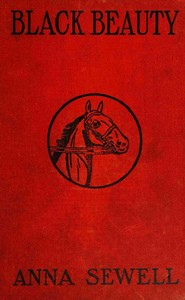
Black Beauty — Key Ideas to Explore
(0 User reviews)
2871
Project Gutenberg
2006
Not confirmed
Historical fiction; Horses -- Juvenile fiction; Human-animal relationships -- Juvenile fiction; Great Britain -- History -- 19th century -- Juvenile fiction
Readers of public-domain and historical texts
Project Gutenberg digital edition
en
Edition facts
Words
63,362
Reading time
276 min
Text sections
8
Black Beauty — Key Ideas to Explore can be approached with a clearer sense of reading commitment from its source measurements: 63,362 words, 4 hr 36 min estimated reading time, and 8 detected text sections.
The text analysis averages about 24.1 words per sentence, while the detected sections provide another way to judge how the source is divided.
Project Gutenberg metadata also associates the work with “Historical fiction,” connecting these edition facts with the source record’s subject description.
Source:
Project Gutenberg record #271
Anna Sewell's 1877 novel, narrated by a horse, uses its protagonist's first-person account to critique animal cruelty and class-based labor practices in Victorian England, blending moral instruction with detailed observations of equine experience.
Read the complete public-domain text at its original source.
Read on Project GutenbergBlack Beauty is unusual among Victorian novels for its first-person narrator: a horse. From the opening meadow scene, where the colt recalls his mother's advice about manners and breeding, Sewell establishes a voice that is observant, patient, and morally earnest. The narrative does not simply anthropomorphize; it stays grounded in equine perception—the feel of a rein, the sting of a whip, the weight of a load. Over the course of the book, Beauty passes through many hands, from kind owners to brutal ones, and the reader is asked to see each human action through its effect on the animal. The result is a work that functions as both a sentimental story and a pointed social critique, one that relies on accumulated detail rather than dramatic plot turns.
Narrative Voice and Equine Perspective
Sewell’s choice to let a horse tell his own story is not a gimmick; it shapes every observation. Beauty describes his breaking-in as a process of learning “to wear a halter” and “to stand still,” and he notes that his mother “would not let me bite or kick.” The language stays within a horse’s understanding—he knows his father “has a great name” but does not explain it. This limited perspective forces the reader to infer human motives from physical actions. When a driver “flopped the reins about” and gave “unmeaning cuts with the whip,” Beauty registers the pain and confusion, not the driver’s mood. The narrative gains moral force by never letting the horse become a human in disguise; his concerns remain those of a creature who values a steady hand, a soft mouth, and a dry stall.
Work, Class, and the Horse as Laborer
The catalog subjects list “Human-animal relationships” and “Great Britain – History – 19th century,” but the excerpts show a more specific focus: the horse as a working animal whose treatment mirrors class hierarchies. Beauty is “well-bred and well-born,” yet he is hired out as a “job horse” to drivers who range from the careful Squire Gordon to the negligent “tight-rein” and “loose-rein” types. Sewell draws a direct line between a driver’s skill and his moral character. A good driver, like John Manly, “kept us to our best paces and our best manners,” while a bad one “never thought it worth while to keep an eye on his horse.” The horse’s body becomes a record of human carelessness: a stone in the hoof, a hard mouth, a broken spirit. This is not a generic plea for kindness; it is a detailed indictment of specific practices—overwork, poor driving, neglect—that were embedded in the urban and rural economies of the time.
Moral Instruction Through Accumulated Detail
Sewell’s method is cumulative rather than dramatic. The excerpts do not contain a single climactic scene; instead, they build a case through repeated examples. Beauty’s mother tells him that “colts who live here are very good colts, but they are cart-horse colts, and of course they have not learned manners.” This early lesson in breeding and behavior sets up a pattern: the horse is constantly judged by his response to human handling. Later, the narrator catalogs “all the different kinds of bad and ignorant driving” as if compiling evidence. The effect is didactic but not preachy, because the lessons emerge from concrete situations—a driver laughing while his horse picks up a stone, a whip used “though I was fairly off.” The book’s moral weight comes from the sheer number of such observations, each one a small argument for a more attentive, less cruel relationship between humans and the animals they depend on.
Readers approaching Black Beauty should attend to its structure as a series of episodes rather than a continuous plot. The novel rewards attention to the specific conditions of horse-keeping in the 1870s—the types of carriages, the vocabulary of driving, the economics of hiring—because Sewell uses these details to make her moral case. The horse’s voice is the constant, and the reader’s task is to see each human character through his eyes, measuring their worth by their hands on the reins.
Rain came down hard that afternoon, and I stayed curled with Black Beauty, tracing how quietly he bore his burdens. The horses' resigned dignity stayed with me long after I closed the book, and I found myself reaching, almost without thinking, for Rasselas, Prince of Abyssinia — Reading Notes—another voice contemplating restraint and patience, though from a very different saddle. Both left me pondering what it means to endure.
There are no reviews for this eBook.
There are no comments for this eBook.
Reader reflection
Record your reading impressions
A brief reflection can help important ideas stay with you longer.
Your progress
0
/
10
2
How did the book work for you overall?
3
Would you pass this book on to a friend?
4
How demanding did the text feel?
5
How distinctive were its ideas or approach?
6
Did this book create an emotional response?
7
Did the book give you something worth debating?
8
How personally connected did you feel to the book?
9
In one sentence, what did you learn?
10