1

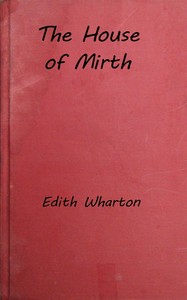
The House of Mirth — Background and Themes
(0 User reviews)
2950
Project Gutenberg
1995
Not confirmed
New York (N.Y.) -- Fiction; Psychological fiction; Single women -- Fiction; Social classes -- Fiction
Readers of public-domain and historical texts
Project Gutenberg digital edition
en
Edition facts
Words
137,123
Reading time
597 min
Text sections
31
Before opening The House of Mirth — Background and Themes, the edition data offers a quick orientation: 137,123 words, 9 hr 57 min estimated reading time, and 31 detected text sections.
The text analysis averages about 21.7 words per sentence, while the detected sections provide another way to judge how the source is divided.
Project Gutenberg metadata also associates the work with “New York (N.Y.) -- Fiction,” connecting these edition facts with the source record’s subject description.
Source:
Project Gutenberg record #284
An editorial note examining Edith Wharton's precise diction and dialogue in The House of Mirth, focusing on how Lily Bart's opening encounter with Selden and her later confrontation with Mrs. Peniston reveal social performance, economic anxiety, and the weight of material objects.
Read the complete public-domain text at its original source.
Read on Project GutenbergEdith Wharton opens The House of Mirth with a scene of calculated chance. Lily Bart, stranded in Grand Central Station, greets Lawrence Selden with an eager “What luck!” that immediately signals her skill at turning accidents into opportunities. Wharton’s narration, filtered through Selden’s perception, describes Lily as “a figure to arrest even the suburban traveller rushing to his last train,” emphasizing her visual prominence against the crowd. The author’s choice to begin in a transit hub—a place of movement and transition—underscores Lily’s precarious social position: she is always between houses, always waiting for rescue.
Diction of Display and Dissection
Wharton’s vocabulary in the opening chapter oscillates between the language of spectacle and that of scrutiny. Lily is “radiant,” her “vivid head” set apart from “dull tints,” yet Selden’s mind immediately calculates: “Was it really eleven years… had she indeed reached the nine-and-twentieth birthday?” The narrator’s clinical precision—noting “eleven years of late hours and indefatigable dancing”—turns a compliment into a ledger. Wharton often uses financial or mercantile terms for social interactions: Selden’s “impulse of curiosity” makes him “stroll past her,” as if testing a commodity. Later, Mrs. Peniston’s lips shut “with the snap of a purse closing against a beggar,” making the aunt’s refusal to hear Lily’s troubles a literal act of economic denial. Such word choices bind personal worth to monetary value, a thread that runs through the excerpts.
Dialogue as Social Chess
Wharton’s dialogue reveals character through indirection and subtext. Lily’s first words to Selden—“How nice of you to come to my rescue!”—frame a casual meeting as a favor, inviting him into a script where he plays the gallant. She jokes about sitting out a train as one sits out a cotillion, collapsing the distinction between ballroom and railway station. In contrast, Mrs. Peniston’s dialogue is clipped and deflective. When Lily admits to worries, her aunt responds with a digression about a cook’s copper scouring, a non sequitur that blocks emotional intimacy. The aunt’s line “I fail to see how any one with your income, and no expenses” exposes her refusal to acknowledge Lily’s hidden costs—the dresses, the tips, the appearances that maintain her place. Wharton lets these verbal exchanges carry the weight of unspoken power struggles.
Objects as Moral Barometers
Wharton loads her descriptions with objects that carry symbolic weight. In Mrs. Peniston’s sitting-room, the “black satin arm-chair tufted with yellow buttons” and the “bead-work table bearing a bronze box with a miniature of Beatrice Cenci” are not mere decor; they are the furnishings of a prison. Lily feels for them “the same distaste which the prisoner may entertain for the fittings of the court-room.” The miniature of Beatrice Cenci—a woman executed for murdering her abusive father—adds a grim irony. Later, Lily’s jewelled watch and her laces are tokens of the very expenses she cannot afford. When she reckons her debt to Trenor as “nine thousand dollars,” the precise figure makes her moral crisis concrete: “a woman’s dignity may cost more to keep up than her carriage.” Wharton uses these material details to anchor abstract dilemmas in physical reality.
Narrative Voice and the Limits of Sympathy
Wharton’s third-person narration shifts between Selden’s perspective and a more detached, ironic tone. In the opening, Selden’s view dominates: he speculates about Lily’s “desultory air” and “far-reaching intentions,” treating her as a puzzle. Later, when Lily confronts her aunt, the narration aligns more closely with Lily’s interiority: “She was realizing for the first time that a woman’s dignity may cost more to keep up than her carriage.” Yet Wharton never fully endorses Lily’s self-pity. The phrase “the winged furies were now prowling gossips who dropped in on each other for tea” undercuts Lily’s night terrors with a wry deflation. This narrative distance prevents the reader from settling into easy sympathy, forcing a critical awareness of Lily’s own complicity in the social game. The excerpts offer only fragments of her arc, but the voice consistently balances empathy with judgment.
These excerpts from the opening and middle chapters of The House of Mirth demonstrate Wharton’s method of embedding social critique in the smallest verbal and material details. Readers attentive to the author’s diction will notice how often a word like “luck” or “rescue” carries ironic weight, and how objects—a watch, a chair, a miniature—become evidence of the forces constraining Lily. The incomplete text leaves many questions unanswered, but the patterns visible here reward close reading.
This editorial note brought back an afternoon in my grandmother’s parlor, where every porcelain figurine felt like a silent verdict on our family’s standing. Lily’s dread of Mrs. Peniston’s judgment—the way objects could condemn—reminded me of a similar ache I found in Lady Susan — A Closer Reading, where letters, not furniture, carried the same quiet, suffocating weight of social survival.
There are no reviews for this eBook.
There are no comments for this eBook.
Reader reflection
What did you think of this book?
Answer a few questions and save a private reflection on this device.
Your progress
0
/
10
2
How did the book work for you overall?
3
Would you recommend this book to another reader?
4
How easy was the book to follow?
5
Which aspect of the book did you value most?
6
How would you describe its reading pace?
7
Was the book easy to understand?
8
Would this book work well in a reading group?
9
In one sentence, what did you learn?
10