
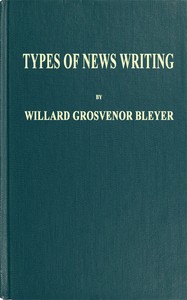
Types of News Writing by Willard Grosvenor Bleyer
Don't go into this book expecting a novel with a plot. Think of it more as a field guide or a masterclass in a bottle. Willard Bleyer, a journalism professor from the early 1900s, collected hundreds of real newspaper articles from his time. He sorted them into categories—like news leads, interviews, human-interest stories, editorials, and reviews—and then dissected them. For each type, he shows you what makes it work, pointing out the structure, the style, and the goal of the writing.
Why You Should Read It
This book is a quiet revelation for anyone who reads or thinks about the media. It’s startling to see how many of the formats we take for granted today were already standardized over 100 years ago. Reading the actual examples—stories about newfangled automobiles, society gossip, and political scandals of the Gilded Age—is a history lesson in itself. But the real value is seeing the craft laid bare. Bleyer isn't just showing you what was written; he's teaching you how and why. It makes you a more aware consumer of information, even now.
Final Verdict
This is a must-read for aspiring writers, journalism students, or history nerds who love the smell of old newsprint. It’s also perfect for curious readers who enjoy seeing the origins of everyday things. Fair warning: it’s a textbook from 1916, so it’s methodical, not melodramatic. But if you have that spark of curiosity about how stories are built, this foundational text is surprisingly engaging and incredibly insightful.
Legal analysis indicates this work is in the public domain. Thank you for supporting open literature.
Andrew Torres
1 year agoAfter finishing this book, it creates a vivid world that you simply do not want to leave. Highly recommended.
Betty Walker
3 months agoSurprisingly enough, the clarity of the writing makes this accessible. This story will stay with me.
Michelle Anderson
1 year agoHelped me clear up some confusion on the topic.
Paul Thomas
1 year agoGreat reference material for my coursework.







Thomas Young
2 years agoIf you enjoy this genre, the author's voice is distinct and makes complex topics easy to digest. I would gladly recommend this title.