
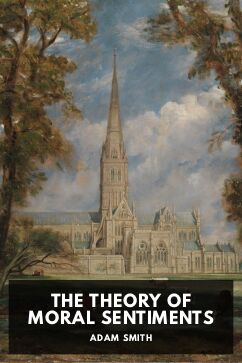
The Theory of Moral Sentiments - Adam Smith
Okay, let's clear this up right away: this is not a dry economics textbook. There's no plot in the novel sense, but the 'story' Adam Smith is telling is about the origin of human morality itself. He starts with a simple observation: we are naturally self-interested. Yet, we constantly make judgments about what's right and wrong, and we often act with kindness, even when it costs us.
The Story
Smith's core idea is the 'impartial spectator.' He argues we're social animals who desperately want approval. We learn what's good by watching others, and then we internalize that audience. We imagine how a neutral, well-informed person would judge our actions, and that imaginary judge becomes our conscience. The book walks you through how this process explains everything from our instinct to help someone in pain (sympathy) to our deep fear of public shame. It's the story of how, out of sheer social need, we build a moral compass inside ourselves.
Why You Should Read It
I picked this up expecting a chore and found a mind-bender. It's Smith at his most human and philosophical. The coolest part is how he connects tiny, everyday feelings—like wincing when you see someone get hurt, or feeling proud when you keep a promise—to the grand structure of a functioning society. It makes you realize that our sense of fairness and decency isn't just handed down by religion or law; it's something we actively co-create with each other every day. Reading it, you'll start spotting the 'impartial spectator' in your own head, judging your choices. It gives a powerful name to that little voice of conscience.
Final Verdict
Perfect for curious readers who enjoy psychology, philosophy, or big ideas about human nature, but are tired of dense academic writing. It's also a must-read for anyone interested in economics or politics, because it shows the moral foundation Smith assumed before he ever wrote about markets. If you've ever wondered why people are sometimes good for no obvious reward, this 250-year-old book has a startlingly fresh and compelling answer. Don't let the title scare you off—it's one of the most insightful books on being human you'll find.
This work has been identified as being free of known copyright restrictions. You do not need permission to reproduce this work.
Kimberly Perez
9 months agoI took detailed notes while reading through the chapters and the author manages to bridge the gap between theory and practice effectively. The price-to-value ratio here is simply unbeatable.
Elizabeth Harris
1 year agoI've gone through the entire material twice now, and the visual layout and supporting data make the reading experience very smooth. Truly a masterpiece of digital educational material.
Joseph Harris
4 months agoThis digital copy caught my eye due to its reputation, the data points used to support the main thesis are quite robust. Top-tier content that deserves more recognition.
Kimberly Nguyen
6 months agoThe formatting on this digital edition is flawless.
Jennifer Johnson
2 months agoI found the author's tone to be very professional yet accessible, the inclusion of diverse viewpoints strengthens the overall narrative. This should be on the reading list of every serious professional.